
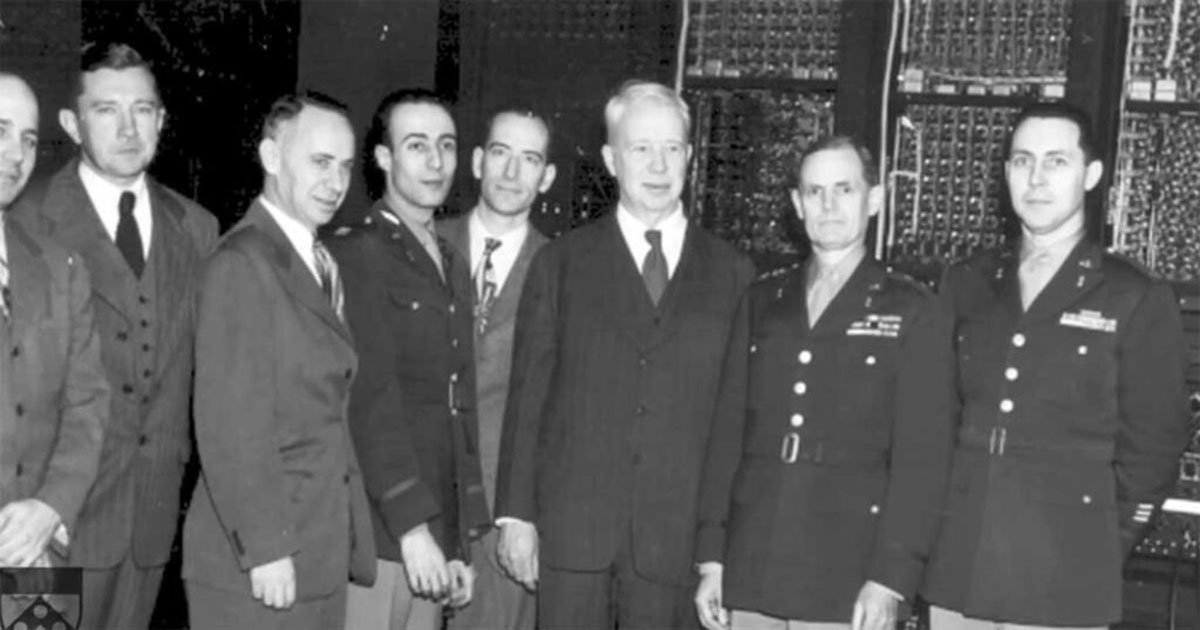
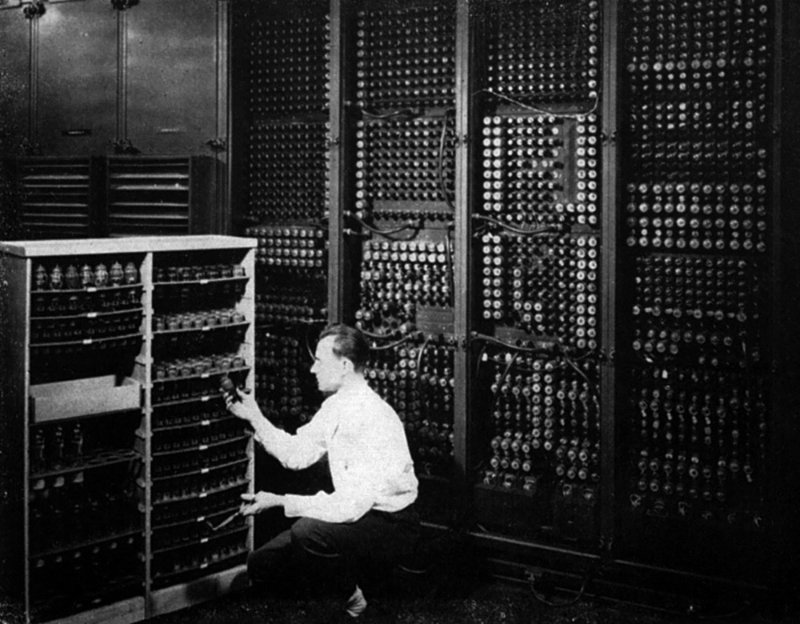
The rapid emergence of large-scale electronic computing in the United States did not occur in isolation. It was driven primarily by military demand during and after World War II, when speed, scale, and reliability of calculation became strategic necessities.
During the 1940s and 1950s, the U.S. armed services—particularly the Navy—were among the only institutions with the financial resources, facilities, and urgency required to support experimental electronic computers. Problems involving ballistics, logistics, cryptography, navigation, and weapons systems demanded computational capabilities far beyond what mechanical or electromechanical devices could provide.
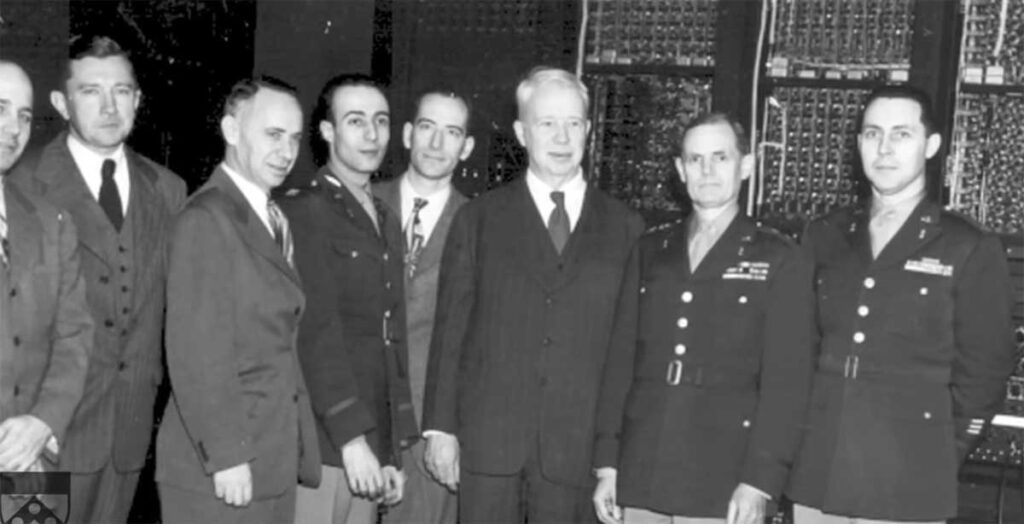
As a result, military laboratories, naval shipyards, and affiliated research facilities became early centers of electronic computing activity. These environments combined secure infrastructure, technical personnel, and sustained funding, allowing experimental systems to be designed, tested, modified, and ultimately transitioned into operational use.
Publicly available records, institutional histories, and later declassified summaries consistently show that early electronic computers were first justified, funded, and deployed within military contexts long before they became commercial products.
This historical reality is essential context for understanding why early computing work frequently occurred in or near naval facilities—and why civilian engineers employed by private corporations were often embedded in military environments during this period.