
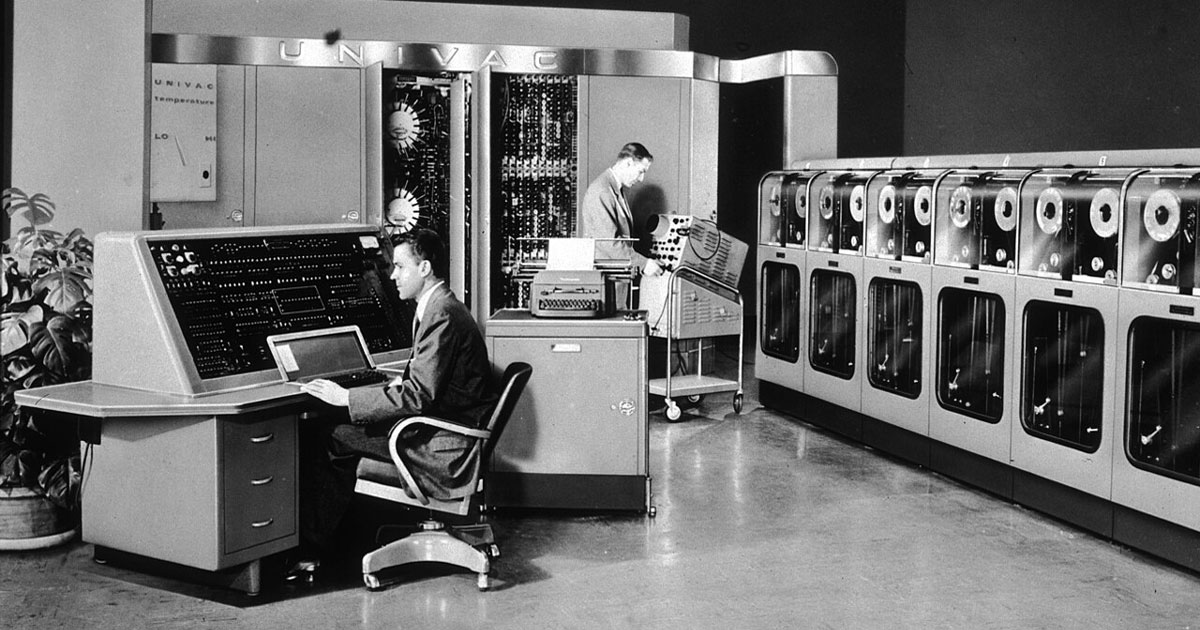
By the early 1950s, electronic computing had moved beyond pure experimentation and into a transitional phase between military research and commercial application. This transition was neither accidental nor evenly distributed across industry. It occurred where technical expertise, facilities, and funding converged—most often within military-supported environments.
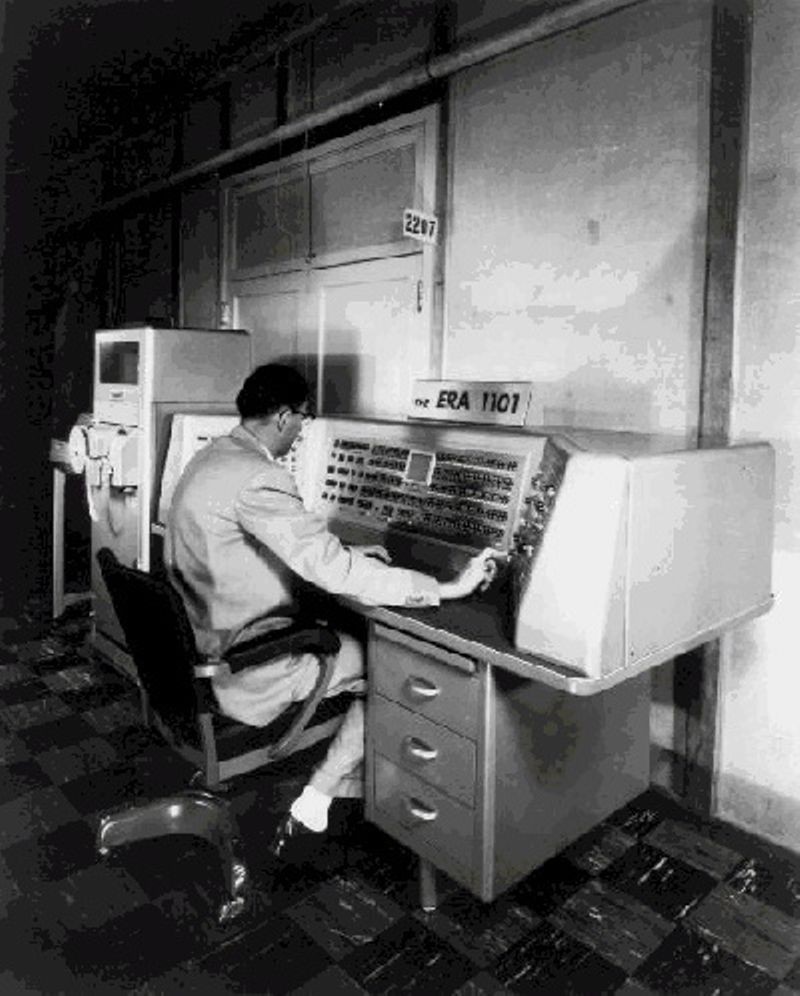
The U.S. Navy was among the earliest and most significant customers for electronic computing systems. One of the first commercially produced computers, the ERA 1101—designed by Engineering Research Associates and built by Remington Rand—was developed for high-speed military computation. The system stored data on a magnetic drum capable of holding approximately one million bits, an early and influential form of magnetic storage.
Many architectural features pioneered in the ERA 1101 carried forward into later Remington Rand and Sperry Rand systems, including the UNIVAC line. This continuity illustrates how military-funded research directly shaped subsequent commercial computer designs well into the 1960s.
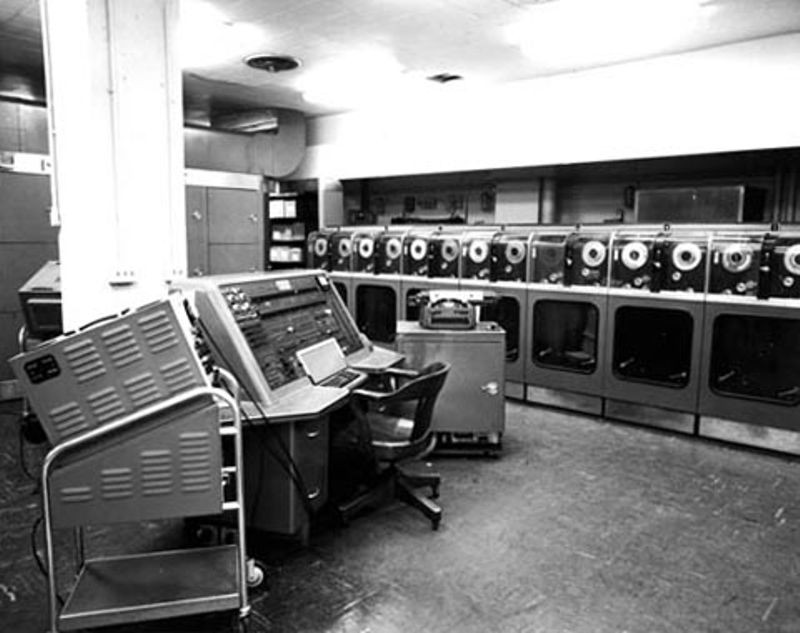
Naval shipyards, including the Philadelphia Naval Shipyard, offered a unique combination of secure space, technical infrastructure, and proximity to private contractors. The shipyard’s location near Eckert-Mauchly Computer Corporation’s Philadelphia facilities made it a practical site for collaboration, testing, installation, training, and operational deployment.
While publicly available documentation does not always describe the full scope of classified or sensitive activities conducted at these sites, unclassified records clearly establish that naval facilities played an essential role in hosting, operating, and supporting early electronic computers.
This context does not require proof of a specific machine in a specific room at a specific moment. Instead, it establishes a historically documented environment in which private-sector development, military funding, and naval infrastructure were tightly interwoven.
Included for historical context on early electronic computing research associated with Philadelphia institutions.